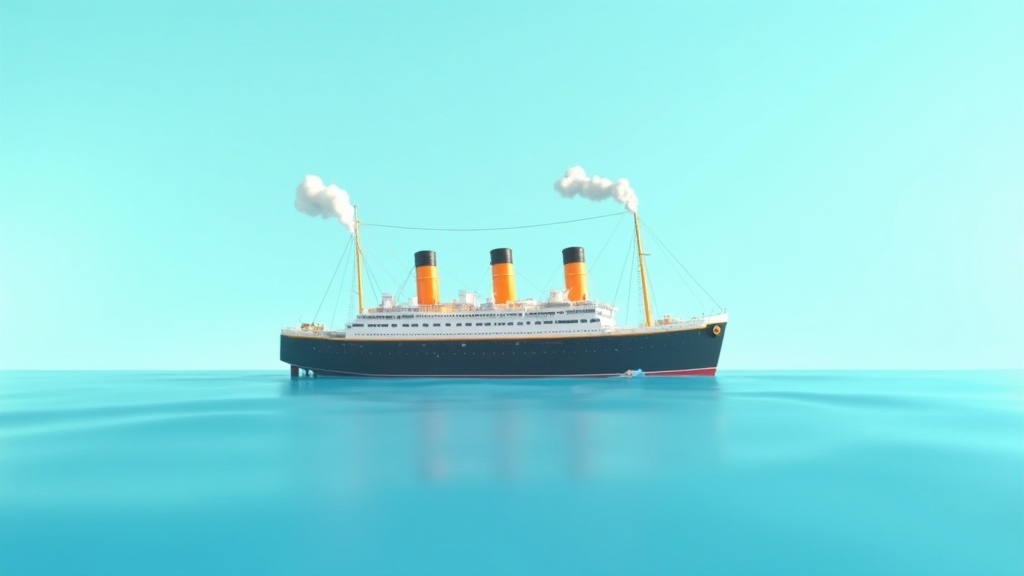

The RMS Carpathia was the heroic ocean liner that answered the Titanic's distress call on April 15, 1912. It raced 58 miles through icy waters in only 3.5 hours to rescue survivors. This amazing feat highlights incredible bravery in a crisis.
Imagine sailing on a huge ship late at night when suddenly a message crackles over the radio: SOS! A massive ship has hit ice and is sinking fast!
That's exactly what happened to the crew of the RMS Carpathia on April 15, 1912. While the enormous, brand-new *Titanic* was sinking in the freezing North Atlantic, the Carpathia—a smaller, but incredibly brave ship—heard their call for help. This wasn't their job, and the sea was full of dangerous icebergs, but the captain and crew knew they had to try! Their heroic dash across the icy waters saved hundreds of lives. Let's learn about the amazing Carpathia rescue for kids!

Mira says:
"Wow, Finn! It takes a true hero to speed toward danger when everyone else is running away. The Carpathia crew were superstars in their own right!"
What is the RMS Carpathia Anyway?
The RMS Carpathia was a grand ocean liner, just like the Titanic, but she wasn't trying to be the biggest or the fanciest. She belonged to the Cunard Line and was built to carry passengers, often immigrants, between Europe and America. Think of her as a reliable, hard-working ship that made the journey almost every week.
When the *Titanic* disaster happened, the Carpathia was actually on a cruise route heading from New York toward Fiume, Austria-Hungary (that's in Croatia today). She was a bit older than the *Titanic*, having started her voyages in 1903, but her crew was ready for anything!
Mind-Blowing Fact!
The *Carpathia* was much smaller than the *Titanic*! The *Titanic* weighed over 46,000 tons, but the *Carpathia* was only about 13,600 tons—that’s like comparing a giant school bus to a smaller minivan!
The Race Against Ice and Time
When the distress signal came in around 12:20 AM on April 15th, Captain Arthur Henry Rostron was awakened. He didn't hesitate! He ordered the ship turned around and set a course straight for the *Titanic*'s last known location. This was risky because they were heading into a sea filled with icebergs, the same danger that sank the *Titanic*!
To get there faster, Captain Rostron ordered the crew to push the engines harder than usual, racing at top speed, close to 17 knots, even though their usual top speed was about 14 knots. He also had the heating turned off to save steam for the engines—imagine trying to stay warm with no heat on a ship in the cold night!
(108 km) away when the call was received
It took this long to race through the ice field
The amazing number of people rescued from lifeboats
When they arrived safely in New York City
How Did the Carpathia Crew Prepare for Survivors?
Captain Rostron didn't just drive fast; he prepared his ship to be the best possible hospital and safe haven. The crew worked like lightning to get ready for the freezing, scared people they expected to pull from the water.
The preparations involved making everything ready for the rescued passengers:
Getting the Ship Ready:
Dining rooms were turned into makeshift hospitals for the injured and sick.
Extra lookouts were posted to help spot the tiny lifeboats in the dark water.
Blankets, hot soup, and warm drinks were prepared for everyone who was rescued.
Passengers and crew on the *Carpathia* even gave up their own cabins so the survivors would have warm beds!
💡 Did You Know?
The *Carpathia* arrived at the sinking site around 4:00 AM, about an hour and a half after the *Titanic* went down. By then, the *Titanic* was already at the bottom of the ocean, and the only things left floating were the lifeboats filled with survivors!
🎯 Quick Quiz!
What was the name of the Captain of the heroic Carpathia?
Why is the Carpathia a True Hero Ship?
The *Carpathia* is a hero ship because its crew showed incredible courage and compassion. They rushed toward a known danger zone to help people they didn't even know, and they treated every single survivor with kindness.
When they finally arrived in New York City on April 18, 1912, thousands of people were waiting on the docks, cheering for the heroes who had brought their loved ones home safe. The *Carpathia*'s crew received medals for their amazing work in this famous story for kids.
- Courage: Sailing directly into an ice field to reach people in trouble.
- Speed: Pushing the engines past their usual limit to save time.
- Compassion: Making sure the survivors were warm, fed, and cared for on the long trip to New York.
- Selflessness: Giving up their own space and comfort for the rescued passengers.
Sadly, the *Carpathia*'s story didn't end there! During World War I, this hero ship was used to carry troops and supplies. In 1918, a German submarine torpedoed the *Carpathia*, and she sank. But even her final moments were heroic, as most of her crew survived thanks to quick thinking. Years later, in 1999, the wreck of the *Carpathia* was found deep under the ocean!
Questions Kids Ask About Famous Ships
Keep Exploring the Waves of History!
The story of the *Carpathia* and its brave crew is a powerful reminder that heroes come in all shapes and sizes—even in a ship that wasn't the biggest on the sea! Keep looking for the quiet heroes in history books, because their actions often make the biggest difference for kids and everyone else!