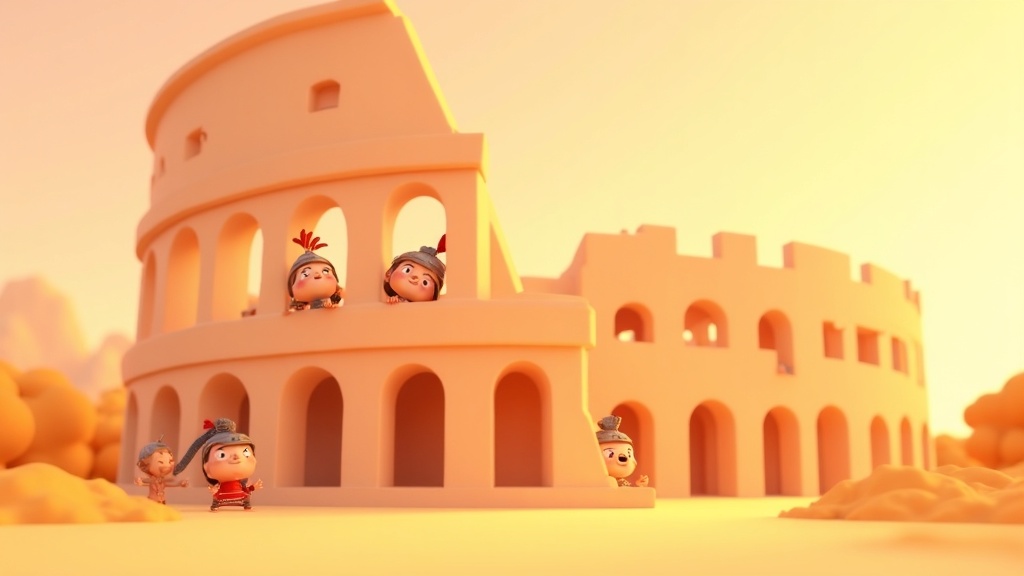
The Colosseum was an ancient Roman amphitheater built for massive public spectacles like gladiator fights and wild animal hunts. It could hold up to 80,000 spectators! This freestanding oval arena was built to showcase Rome's incredible engineering skill to all its citizens.
Imagine a stadium so HUGE that it could fit almost 80,000 people cheering at the same time! That’s what the incredible Colosseum in Rome, Italy, was like!
This amazing structure, which the ancient Romans called the Flavian Amphitheater, is one of the most famous buildings in the whole world. Construction started around 70 or 72 AD under Emperor Vespasian and was finished by his son, Titus, in 80 AD! It was built using super-strong materials like stone, concrete, and tuff (a type of volcanic rock). For nearly 500 years, this giant oval was the number one spot for incredible—and sometimes scary—public shows for kids and grown-ups alike.

Mira says:
"Wow, Finn! Thinking about how many people could watch a show in the Colosseum—way more than a modern football stadium! It must have been so loud when everyone cheered for the gladiators!"
What Was Life Like Inside the Colosseum?
The Colosseum was an amphitheater, which just means it was a circular or oval building with seats rising up around a central stage. That stage was called the arena! The word 'arena' actually comes from the Latin word for sand, harena, because the wooden floor was covered in a thick layer of sand to soak up all the spills.
The Romans loved big, exciting spectacles, and the Colosseum was the perfect place for them. It wasn't just for one thing; it was like an ancient multi-purpose stadium! People came to watch everything from gladiator fights to dramatic plays based on Roman myths.
Mind-Blowing Fact!
The very first games held to celebrate the Colosseum’s opening in 80 AD lasted for 100 whole days! Emperor Titus put on the biggest show ever to make the Roman people happy.
How Tall Was This Gigantic Structure?
The Colosseum is massive, even today in its ruined state! It's a true marvel of ancient engineering because it was built as a freestanding structure—meaning it didn't need a hillside for support like older stadiums.
Imagine something as tall as a 12-story building! The outer wall reached about 48 meters (158 feet) high. The entire building was oval-shaped, measuring about 189 meters (620 feet) long and 156 meters (513 feet) wide.
Seating Capacity
Duration in 80 AD
Killed in Opening Games (one count)
Originally had three levels of arches plus the top floor
How Did the Romans Stage Such Wild Shows?
The most exciting part of the Colosseum’s design wasn't the seats—it was what was under the floor! Emperor Domitian added a huge underground network called the hypogeum after the opening games.
This underground maze was full of tunnels, cages, and even elevators! This allowed them to raise gladiators, scenery, and wild animals to suddenly pop up through trap doors right onto the sandy arena floor. Talk about a surprise entrance!
A Day at the Games: Morning, Noon, and Afternoon
The events were scheduled perfectly, just like a modern TV marathon! Morning shows were for animal hunts and battles, where animals from all over the Roman Empire fought each other or humans.
Midday was the darkest time, when condemned criminals were executed. Sometimes this was done by making them fight each other or be killed by animals, often staged like scenes from Roman myths.
The Afternoon was the main event: the gladiator combats! These were professional fighters, often slaves, who battled each other. Their fights were the most famous attractions in the Colosseum.
💡 Did You Know?
Believe it or not, for a short time in the very beginning, the Romans actually flooded the arena floor to put on mock sea battles (called naumachiae) with real, smaller ships!
🎯 Quick Quiz!
What was the Colosseum originally called by the Romans?
Who Sat Where? Roman Social Rules!
Sitting in the Colosseum wasn't random—it showed exactly where you stood in Roman society! The best seats went to the most important people, right down near the action.
Imagine getting box seats! The Emperor and the powerful Vestal Virgins had the very best spots. Senators sat just above them, followed by the noble class (the equites), and finally, the common citizens (plebeians) sat higher up.
- The Emperor/VIPs: Had private boxes with the best view.
- Senators: Sat in the first tier, sometimes carving their names into the stone!
- *Knights (Equites):* The wealthy non-senators sat in the second tier.
- *Ordinary Citizens (Plebeians):* Sat in the middle to upper levels.
- Women and the poor: Sat at the very top, farthest from the arena floor.
Even though the gladiator games ended in the Middle Ages, the Colosseum never truly stopped being used! It has been everything from a fortress to housing for poor families, and even a Christian shrine. It’s amazing that even after earthquakes, fires, and people stealing its materials, this incredible piece of ancient engineering is still standing today for us to explore!
Questions Kids Ask About Ancient Rome
Keep Exploring Ancient Wonders!
The Colosseum isn't just a pile of old stones; it’s a giant reminder of Roman engineering, entertainment, and history. Think about the thousands of people who cheered there and the incredible things they built with just stone and concrete! What other amazing Roman sights should we explore next?