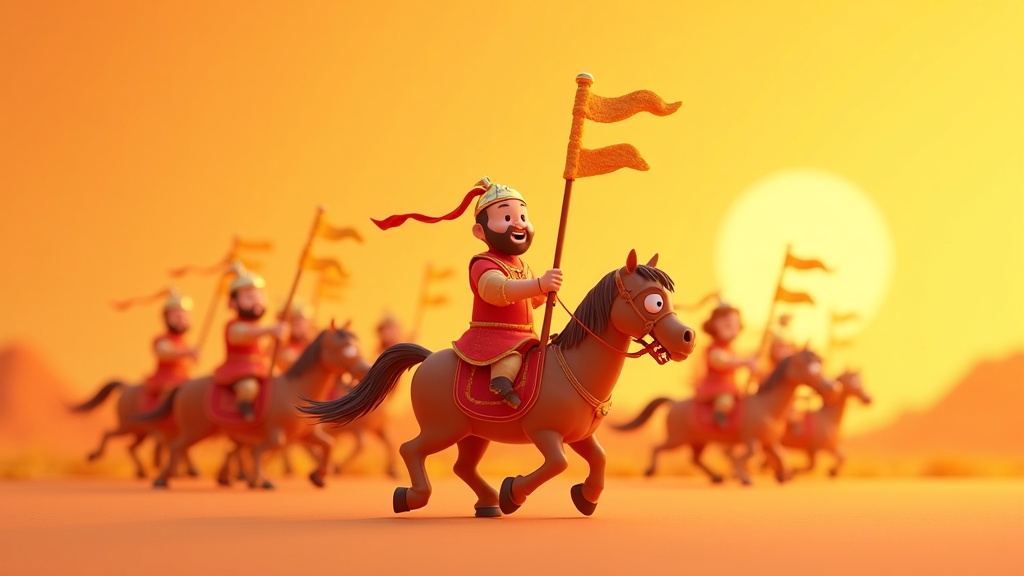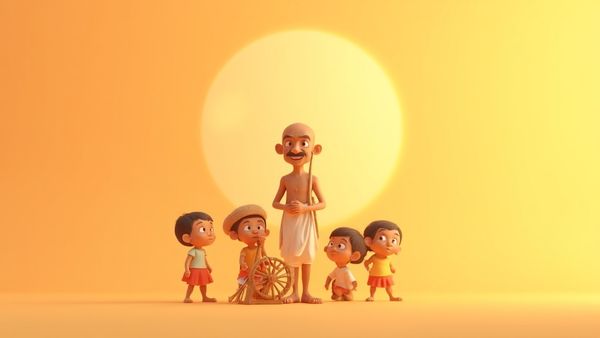
Gandhi's method of fighting for Indian Independence was called Satyagraha, meaning 'truth force.' He famously protested unfair British rules, like the Salt Act, by leading a 240-mile march to make his own salt. It taught the world how peaceful resistance can change history.
Imagine a whole country wanting to be free from the powerful rulers who lived far away. How do you fight a giant empire without using any weapons?
That’s exactly what the amazing Mahatma Gandhi helped India do! For a very long time, India was ruled by the British—this time in history is often called the British Raj, which lasted for about 200 years! But Gandhi showed everyone that the strongest power of all is peace and not giving up! This story is about how one determined man, using only his powerful ideas, helped guide a nation toward its freedom, which finally happened in 1947.

Mira says:
"Wow, Finn! Fighting a whole government without shouting or throwing a single stone? That takes more courage than any sword fight I’ve ever read about! Gandhi’s idea of 'Satyagraha'—holding onto truth—is super inspiring for kids today!"
What is Satyagraha? Gandhi’s Secret Weapon!
Gandhi had a special name for his method of fighting for what was right: Satyagraha. This big word basically means 'truth force' or 'holding firmly to the truth'.
Instead of fighting with armies, Gandhi taught people to peacefully break unfair laws. This was called civil disobedience. They would accept the punishment, like going to jail, without getting angry or hitting back. They believed that if enough people showed the rulers how unfair their laws were by peacefully refusing to follow them, the rulers would eventually have to listen.
Mind-Blowing Fact!
The nickname 'Mahatma' means 'Great Soul' in a language called Sanskrit. People gave him this wonderful name because they deeply respected his kindness and wisdom!
The Famous Salt March: A Walk That Shook an Empire!
One of the most famous moments in this fight was the Salt March in 1930. The British had a rule called the Salt Act, which meant Indians couldn't collect or sell their own salt. They had to buy it from the British, who put a huge tax on it!
Gandhi said, 'This is totally unfair! Salt is something everyone needs every single day!' So, he decided to march all the way to the ocean to make his own salt!
(387 km)
(March 12 – April 6, 1930)
Starting at Sabarmati Ashram
Estimated at the end
How Did the Salt March Happen?
The Salt March was a brilliant plan to get the world's attention for India's cause. Here is a quick look at the steps:
### Step 1: Starting the Journey
On March 12, 1930, Gandhi set off from his home, the Sabarmati Ashram, with just 78 dedicated followers. They walked about 12 miles (19 km) each day. The march took 24 days to reach the coast.
Step 2: Gathering Supporters
As Gandhi walked, more and more people joined his line! It was like a long, peaceful parade that grew bigger every hour. By the time they reached the coast, their number had grown into a huge crowd.
Step 3: Breaking the Law Peacefully
On April 6, 1930, Gandhi reached the town of Dandi on the Arabian Sea coast. He walked down to the water, picked up a small lump of natural salt, and declared, 'With this, I am shaking the foundations of the British Empire!' People across India followed his lead and started making or buying their own salt, ignoring the British tax.
💡 Did You Know?
The Salt March was so famous that American journalists at the time compared it to the Boston Tea Party in American history—another famous protest against an unfair tax!
🎯 Quick Quiz!
What was the main idea behind Gandhi’s protest strategy called Satyagraha?
Why Did Gandhi Choose Salt as the Symbol?
Gandhi was a genius for picking salt! He needed something that would unite everyone in India, rich or poor, Hindu or Muslim, to stand up together.
Salt was a basic, everyday need for every single person. By taxing it so heavily, the British were hurting every family’s food budget. It made the fight simple and clear for everyone to understand.
- The Salt March inspired millions to join the Civil Disobedience Movement across India.
- Even though Gandhi and about 60,000 others were arrested by the end of the year, they showed the world the strength of peaceful protest.
- The protests made global headlines, and Gandhi was even named Time Magazine's Man of the Year!
- Gandhi continued to lead India until the country finally achieved independence on August 15, 1947.
Gandhi’s life teaches us that you don't need big weapons to make a huge difference. Sometimes, the quietest voice, speaking the loudest truth, is the most powerful force for change in history for kids and adults alike!
Questions Kids Ask About World History
Keep Exploring Peace and Courage!
What an incredible journey! Gandhi proved that peaceful determination can move mountains—or in this case, shake empires! Keep learning about these brave figures who used ideas instead of arrows to change the world!