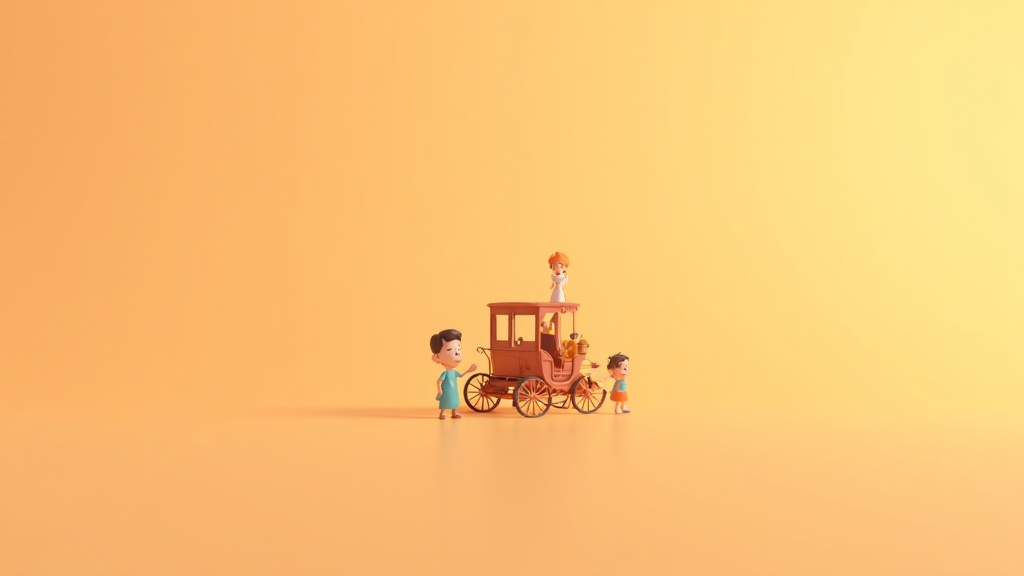
The history of books for kids began with heavy clay tablets and papyrus scrolls. The biggest change came when true paper was perfected around 105 AD by Cai Lun in China. This lighter, cheaper material finally allowed knowledge to spread widely to young readers.
Did you know that every single book you’ve ever read—from silly stories to awesome history facts—is actually a super cool invention?
Books are one of the best ways to share big ideas and fun adventures! But imagine a world without a single printed page. Long before paper, people wrote on all sorts of things! Ancient civilizations carved messages into hard clay tablets, which were super sturdy but heavy to carry around. Others used papyrus scrolls in Egypt, which was a plant-based paper-like material. These early ways of sharing knowledge were important, but they were slow and sometimes hard to keep safe!
Mira says:
"I always thought books just *appeared*! It’s wild to think people used to carry around heavy clay blocks just to read one story. Think how many bricks you'd need for your entire bookshelf!"
What Were the First 'Books' Like?
Before we had the lightweight books we know today, the first ways people recorded stories and information were made from whatever they had around. In ancient Mesopotamia, people used clay tablets and pressed wedge-shaped marks into them using a reed stylus to create cuneiform writing. Think of those as super thick, hard pages!
Later, in places like Egypt, they made a material from the papyrus plant. They layered strips of the plant, pounded them, and dried them into sheets that could be rolled up into scrolls. It was easier to carry than clay, but these scrolls could still tear easily.
Mind-Blowing Fact!
The word 'paper' actually comes from the ancient Greek word for the papyrus plant! Even though they are different things, the name stuck around for our modern paper!
The BIG Invention: Making Real Paper
The next huge step happened in China, about 2,000 years ago! The invention of true paper, made by turning plant fibers into a mushy pulp and then pressing it flat, changed everything. A clever court official named Cai Lun is often credited with perfecting this method around 105 AD.
Cai Lun mixed things like old rags, tree bark, and fishing nets with water, mashed it all up, and pressed out the thin sheet to dry. This new material was lighter and cheaper than papyrus or silk, meaning more people could eventually afford to write on it.
By Cai Lun in China
After the Battle of Talas
In Europe by Gutenberg
How Did Books Get Pictures for Kids?
Once we had paper, it was time to make books fun! The very first illustrated book specifically for children was called *Orbis Sensualium Pictus* in 1658.
It was like a tiny encyclopedia with 150 woodcut illustrations to help young readers learn about objects and trades. It wasn't exactly a fun bedtime story, but it was a huge leap toward the picture books for kids we love today!
The Rise of Fun Reading
In the 1740s, a publisher named John Newbery started making books just for entertainment and learning good behavior, like *A Little Pretty Pocket-Book* in 1744. This showed publishers that kids were a market all their own!
💡 Did You Know?
Before the printing press, every single book had to be copied by hand by a scribe! A single copy of a long book could take many, many months—sometimes years—to finish, which made books incredibly rare and expensive!
🎯 Quick Quiz!
What material did ancient Egyptians use to make scrolls before true paper existed?
The Printing Press Power-Up!
The final invention that made books available to almost everyone was the printing press, brought to Europe by Johannes Gutenberg in the 1440s.
Instead of carving an entire page onto a wood block (woodblock printing, used earlier in China), Gutenberg used movable type—small metal blocks for each letter that could be rearranged. This meant books could be produced way faster and much, much cheaper!
- Clay Tablets: Super heavy, but lasted for thousands of years!
- Papyrus Scrolls: Lighter, but delicate and needed to be rolled up.
- Handwritten Codex: Pages sewn together in book form, still slow to make.
- Movable Type Printing: The game-changer that made books affordable for regular families!
From carved stones to digital e-books, the history of the book is a story of people constantly inventing new ways to share knowledge and tell exciting stories for kids everywhere. It's an invention that lets us travel through time just by turning a page!
Questions Kids Ask About Inventions
Keep Exploring the Pages!
Now you know that the book in your hands is the result of thousands of years of awesome inventions! Next time you open a book, remember the clever people who invented clay, papyrus, paper, and the printing press just so you could have a great story waiting for you. What amazing thing will you discover next?