Before printing, books were painstakingly copied by hand by scribes using materials like papyrus scrolls or vellum made from animal skins. It could take months to complete just one book! Learn about these incredible ancient writing methods.
Did you know that when you pick up a book today, you’re holding something that once took *months* or even *years* to create by hand?
Before the amazing invention of the printing press—which we might talk about in another episode!—making a book was a super slow and tricky job! Today, we're traveling back in time to see how people made books when every single letter had to be written with care. These early books weren't always paper and hardcovers; they were often scrolls made from plants or special animal skins! The earliest forms of books we know of were even clay tablets etched with writing over 5,000 years ago!
Mira says:
"Wow, Finn! It's hard to believe that if you wanted a story, someone had to copy *every single word* by hand onto parchment or papyrus. That must have made books super rare and expensive!"
What Were the First 'Books' Made Of?
Forget the cozy paperbacks you know! Long, long ago, people used whatever materials they had nearby to write down important stories and ideas. Think of materials that last a long time, but are also easy to write on.
One of the earliest 'books' was the scroll, often made from papyrus, which is kind of like an ancient, sturdy paper made from the papyrus plant that grew near the Nile River in Egypt. These were long sheets glued together and rolled up. Another popular choice, especially in Europe, was parchment and vellum, which were made from carefully scraped and treated animal skins, like sheep or calf skin.
Mind-Blowing Fact!
In China, before paper was common, they sometimes used thin strips of bamboo tied together with silk or leather to make their early books! These bamboo books were called *jiance* or *jiandu*.
The Amazing Job of a Scribe
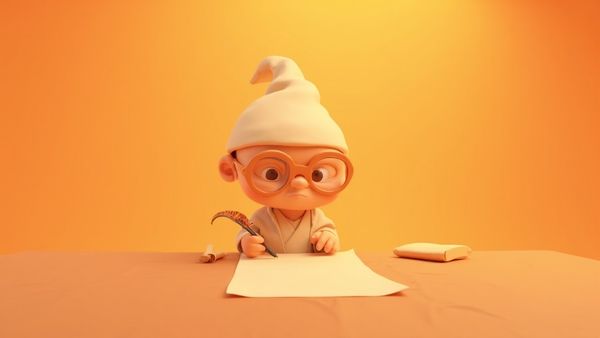
If you wanted a book, you needed a scribe. A scribe was a person who specialized in writing things down by hand. In Europe, many scribes were monks living in monasteries. They spent countless hours carefully copying old texts, often religious books like the Bible.
This was super slow work! A scribe had to make their own ink—sometimes from soot and alcohol—and use a quill pen, which was a carefully sharpened bird feather. They had to be *so* careful not to smudge the wet ink!
(Depending on length and detail)
(Scribes were often slower due to detail)
(A sheep could cost a laborer's wages!)
How Did Scribes Prepare Their Writing Surface?
The process of getting the writing material ready was almost as hard as the writing itself, especially with animal skins!
For parchment or vellum, the animal skin had to be soaked, scraped clean of hair and gunk, stretched on a rack to dry, and then smoothed with a pumice stone until it was perfect.
Saving Space and Recycling Pages
Because parchment was so expensive, scribes sometimes reused old pages! They would use a pumice stone to scrape off the old writing, and then write a new text over the top. These recycled pages are called palimpsests, and sometimes you can still see the faint writing underneath!
Also, the modern book shape we know—pages bound together—is called a codex. This format was much easier to use than a giant scroll, which could get really heavy and hard to flip through!
💡 Did You Know?
Because hand-written books were so rare and valuable, in some old European libraries, books were literally chained to the shelves so no one could sneak away with them!
🎯 Quick Quiz!
What was the writing material made from scraped animal skin called?
Why Was the Printing Press Such a Big Deal?
Imagine needing to copy an entire 300-page book by hand. Even an expert scribe would take many, many weeks, maybe even a year! This is why only the super wealthy or powerful places like monasteries owned many books.
The printing press changed everything by using movable type—little blocks of metal for each letter that could be arranged and re-used over and over. It let people make hundreds of copies much faster. It meant that more people—even if they weren't super rich—could finally own books for kids like you to read!
- Scrolls: Long sheets rolled up, often made of papyrus.
- Codex: The early form of a bound book with separate pages.
- Scribes: Professional hand-writers, often monks.
- Parchment/Vellum: Durable writing surfaces made from animal skin.
- Palimpsest: A fancy word for a recycled parchment page.
Next time you open a book super fast, take a moment to thank the amazing scribes who worked patiently by candlelight, turning animal skins and reeds into the stories we still love today! Their dedication kept history alive for us!
Questions Kids Ask About Inventions
Keep Exploring the History of Ideas!
From a single carved letter to today's instant downloads, the way we share stories keeps changing! How cool is it to know that every book you read has a secret history tied to a dedicated scribe and a carefully scraped animal hide? Keep listening to History's Not Boring!