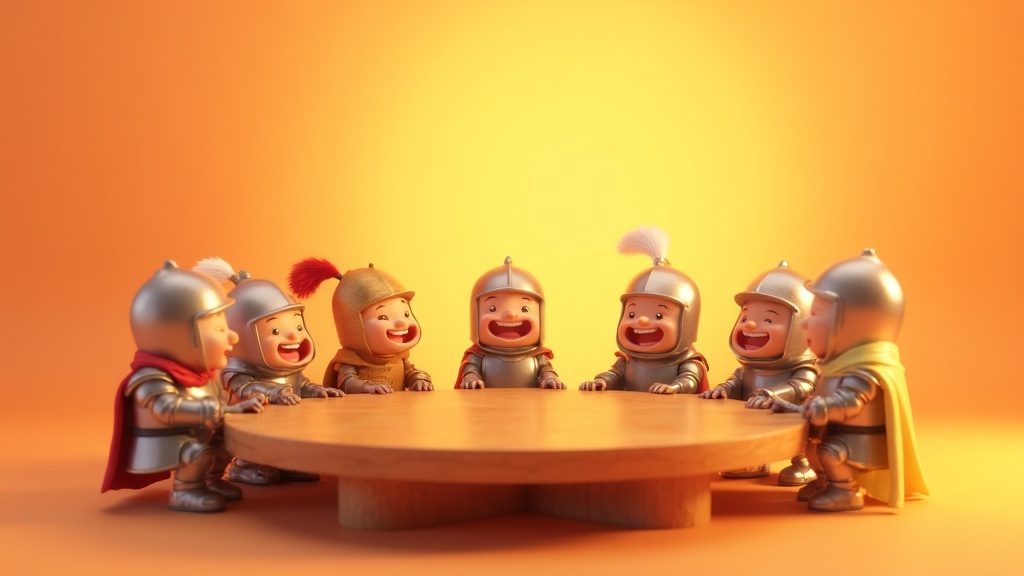

Jousting tournaments were medieval sporting festivals where knights practiced battle skills, primarily between the 12th and 16th centuries. The main event involved two riders charging to break lances or knock opponents off. Special jousting armor could weigh 110 lbs! This exciting history is perfect for young learners.
What if your favorite sports event involved guys in full metal suits riding giant horses at top speed, trying to knock each other off with giant wooden spears?
Welcome to the wild world of jousting tournaments! These weren't just backyard games; they were huge, noisy events in the Middle Ages, happening between the 12th and 16th centuries. Tournaments were the best way for knights to practice their battle skills when there wasn't a real war going on. Think of it like the Super Bowl or the Olympics for knights! The main event was often the joust, where two opponents charged each other, hoping to score points by breaking their lance or, even better, knocking their rival right off his steed!

Mira says:
"Mira says: 'Wow! Imagine wearing that much metal! I bet the horses were super brave to run straight at another one. It must have been as loud as a rock concert when the lances cracked!'"
What is a Jousting Tournament, Anyway?
A tournament wasn't just one single event; it was like a whole festival of knightly sports! The original tournament, called a *mêlée*, was more like a big, messy mock battle between two teams of knights fighting with blunted weapons. It was super popular in the early days.
But as time went on, the joust became the main attraction. A joust is a one-on-one challenge! Two knights would line up on opposite sides of an arena, often called 'the lists,' and charge straight toward each other while holding a long lance.
Mind-Blowing Fact!
The word 'tournament' comes from the Old French word *torneiement*, which is related to 'to turn'—this might be because the knights would charge, hit, and then quickly turn their horses around to charge again!
Knights, Lances, and Super-Heavy Armor Stats!
To survive these crashes, knights needed amazing gear. They wore plate armor, which got heavier and thicker over the centuries, especially for jousting. This special jousting armor could weigh a massive amount!
Jousting lances were wooden poles, and when they hit a target just right, the shock could be huge! Knights were trying to score points by meeting the opponent's shield or armor with their lance tip. A successful hit that broke the lance scored points, but knocking the other rider off earned the biggest glory!
(Up to 50 kg!)
(Almost three times the rider's body weight!)
(As a separate event)
(Ending French jousting popularity)
How Did a Knight Prepare for the Ultimate Showdown?
Being a star jouster meant practice, practice, practice! It wasn't just about swinging a lance; it was about teamwork between the rider and the horse.
The special equipment helped them stay safe and score points in what became a very regulated sport over time. For kids learning about this history, remember that the knights were trying to show off their courage and skill for the King and the ladies watching!
The Joust of Peace vs. The Joust of War
There were usually two main types of jousting. The Joust of Peace was the common one for tournaments, using lances with blunted or special tips designed to break on impact rather than stab. The goal was usually to score points by breaking the lance or unhorsing the opponent.
The Joust of War was much scarier! This version sometimes used sharpened lances and was meant to be a fight 'to the limits' (*au outrance*), sometimes even to the death, especially during wartime!
💡 Did You Know?
Some of the best jousters became international superstars, like the three French knights who won big at St. Inglevert in 1389! They were like the world champions of their day, gaining fame across Europe.
🎯 Quick Quiz!
What was the main goal in a typical Joust of Peace?
Why Did Jousting Tournaments Fade Away?
For a long time, jousting was everything—practice, entertainment, and a way for knights to get rich! Winners could win prize money or even the loser's horse and armor, forcing the loser to buy them back.
But as time marched on, new things changed the game. One huge factor was the invention and use of powerful gunpowder weapons. When soldiers could fight from far away with cannons and muskets, the days of the heavily armored knight on horseback started to end.
- The Tragic End for a King: In 1559, King Henry II of France was fatally wounded during a joust, which caused jousting to lose popularity in France!
- New Sports: By the 1600s, other horse riding sports became more popular than the intense clash of the joust.
- Chivalry's Shift: The focus of the ideal knight changed from being a perfect warrior to something more focused on courtly manners and less on constant mock combat.
Even though full-blown jousting faded, we still see its spirit today! Think of the amazing shows at Renaissance Fairs where skilled riders put on theatrical jousts with lots of pageantry, keeping the thrilling sight of the medieval knight alive for all of us to enjoy!
Questions Kids Ask About Medieval History
Keep Exploring!
From the roar of the crowd to the thunder of hooves, jousting tournaments were an unforgettable part of medieval life for kids and adults alike! Which knight do you think was the best jouster of all time?