Pompeii was a wealthy ancient Roman city in Italy famously buried by the catastrophic eruption of Mount Vesuvius in AD 79. The volcano launched 1.5 million tons of rock and ash, instantly freezing the thriving city in time. It's an incredible look into daily Roman life preserved for centuries.
Imagine a busy, sunny city where people are shopping, laughing, and getting ready for lunch... and then, suddenly, everything stops, frozen forever under a giant blanket of ash! That’s the unbelievable true story of Pompeii!
Pompeii was a wealthy and popular ancient Roman city in Italy, living its daily life right near a huge mountain called Mount Vesuvius. In the year AD 79, this mountain suddenly let out one of the most powerful volcanic eruptions in history! Because it erupted so fast and buried the city under tons of ash, Pompeii became a perfect time capsule, hiding the secrets of Roman life for almost 1,700 years until it was rediscovered.

Mira says:
"Wow! To think that ordinary Roman people—bakers, shoppers, even kids playing with toys—were all there one minute and then gone the next! It’s like history took a sudden, silent photograph of their whole world."
What Was Life Like in Pompeii Before the Disaster?
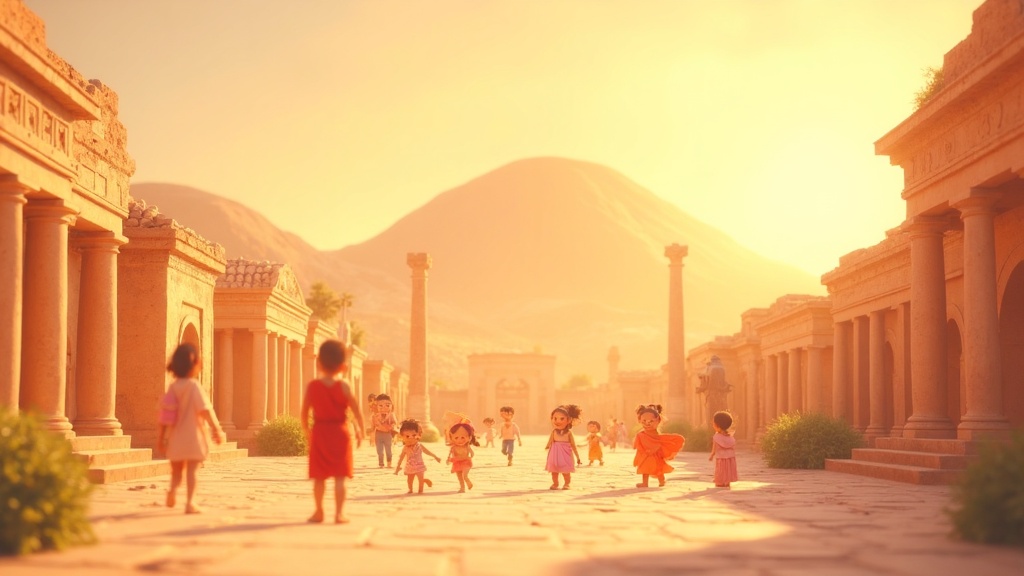
Pompeii wasn't a small village; it was a thriving, busy town! With a population between 10,000 and 20,000 people, it was a place where rich Romans often vacationed.
It was a great spot for business because it was close to the sea for shipping goods and near fertile land for farming. They sold things like wine and olive oil.
The city had amazing public places! They had grand public baths for cleaning and chatting, and even an amphitheater where people watched exciting events, maybe even gladiator fights!
Mind-Blowing Fact!
Did you know that some people in Pompeii could buy hot meals to go from little shops called *thermopolia*? That’s like our modern fast-food drive-thru, but with stone counters instead of windows!
Signs That Something Was Wrong
The people of Pompeii didn't wake up one morning to an eruption—there were warning signs! Long before the big day, the ground often shook.
In AD 62, a huge earthquake caused massive damage across the city, shaking buildings and starting fires. Imagine needing 17 years just to fix everything! Even when Vesuvius erupted in AD 79, some buildings were still being rebuilt.
The people kept rebuilding, thinking it was just an active, shaky region. They didn't realize the mountain was a volcano waiting to explode with unstoppable power.
Ejected *per second*!
The ash cloud shot this high into the sky!
More than the Hiroshima atomic bomb!
How Did Mount Vesuvius Destroy Pompeii?
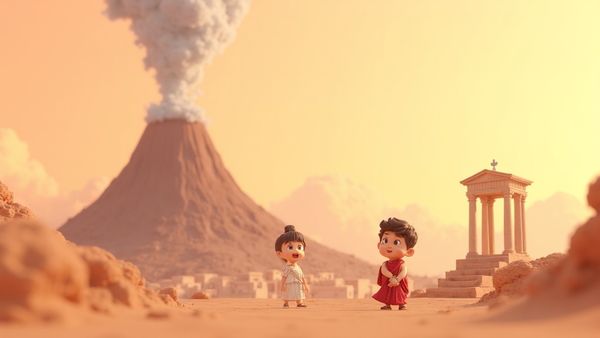
The disaster started around noon on what was supposed to be a normal day. Mount Vesuvius erupted with a massive explosion, shooting a giant column of hot rock, gas, and ash 21 miles into the sky!
The first part of the eruption was like a terrible hailstorm made of pumice stones and ash. This rained down for about 18 hours, piling up so much that some roofs collapsed under the weight.
The Deadly Second Day
Even though the first part allowed many people to flee, the worst was yet to come. The volcano unleashed pyroclastic flows—super-fast, ground-hugging clouds of scorching hot gas and rock moving at speeds up to 70 mph!
These flows were the true killer. The heat was so intense—over 480°F (250°C)—that it instantly killed anyone left in Pompeii, even if they were hiding inside.
More ash followed, completely covering the city. In total, Pompeii was buried under a layer of ash and debris that was up to 19 to 23 feet (6 to 7 meters) deep!
💡 Did You Know?
Because the ash and pumice buried the city so quickly and kept the air out, it preserved everything almost perfectly—from fancy wall paintings and furniture to loaves of bread still in the oven! That's why Pompeii is such an amazing 'snapshot in time' for us today.
🎯 Quick Quiz!
What was the name of the volcano that erupted and destroyed Pompeii?
Who Saw It Happen, and What Did They Find?
We know so much because of a brave writer named Pliny the Younger. He saw the massive eruption from across the bay and wrote letters describing it later!
Sadly, his uncle, Pliny the Elder, died trying to sail closer to rescue people. Scientists even named this type of huge eruption a 'Plinian' eruption after them!
- The Plaster Casts: When archaeologists dug, they found holes in the hardened ash where bodies had decayed. By carefully pouring plaster into these spaces, they created eerie, detailed casts of people and animals in their final moments!
- Everyday Objects: They found things like wooden carts, furniture, and even graffiti carved on walls—showing how ordinary Romans lived and wrote to each other.
- Untouched Art: The colorful murals (wall paintings) and mosaics (tile art) inside homes were protected from the sun and rain, staying vibrant for centuries.
Even though about two-thirds of the ancient city has been uncovered, archaeologists are working slowly to keep the ruins safe from weather and damage, leaving some parts for future scientists with even better tools. Pompeii is a UNESCO World Heritage Site, meaning it’s recognized as one of the most important historical treasures in the world!
Questions Kids Ask About Ancient History
Keep Exploring the Past!
The story of Pompeii shows us how quickly life can change, but also how history can teach us about people who lived long, long ago. Every ruin and every artifact helps us piece together the story of the Roman world. What other ancient mysteries should we dig into next?