The extinction of the dinosaurs was most likely caused by a giant asteroid impact 66 million years ago. This space rock was up to 9 miles wide and caused massive global darkness. Learn how this collision ended the age of dinosaurs!
Imagine walking outside one day and *POOF*—almost all the giant, amazing dinosaurs suddenly disappear! How could something so big and powerful vanish from the Earth?
For millions of years, dinosaurs ruled our planet. They stomped, roared, and flew everywhere! But about 66 million years ago, that all changed. This was the end of the Cretaceous period, and something HUGE happened to wipe out the non-avian dinosaurs. Scientists have looked for clues for a long time, and now they have a leading idea about what caused this massive extinction event, perfect for you to learn about today, for kids!

Mira says:
"It’s like the Earth hit the giant 'reset' button! The world before the big crash was totally different from the world after. We study this massive change to understand how our planet heals."
What Caused the Dinosaur Disaster?
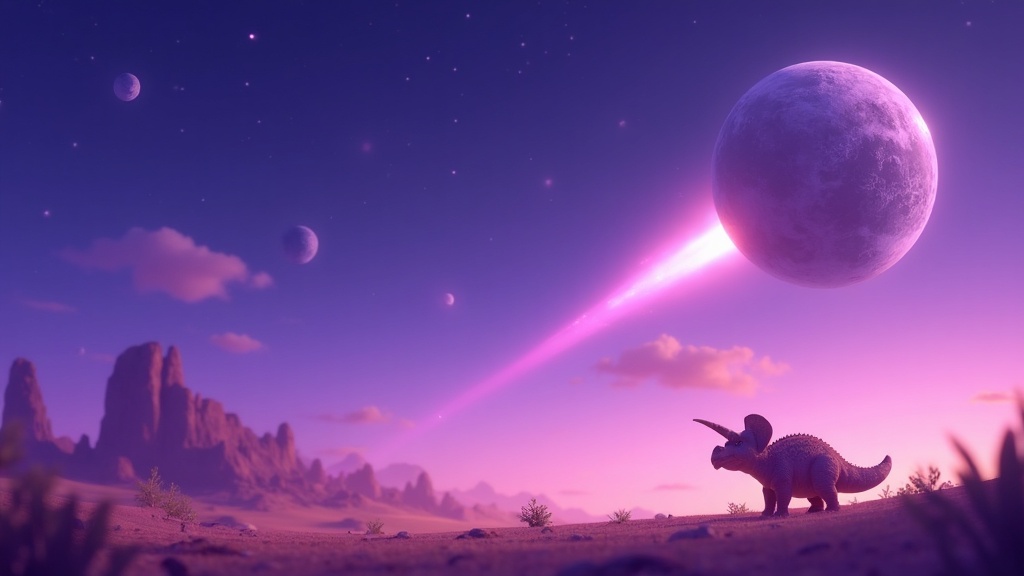
The most accepted idea among scientists is that a giant rock from space, called an asteroid, slammed into Earth! Think of the biggest baseball you can imagine—this asteroid was way, way bigger, maybe 6 to 9 miles (10 to 15 kilometers) wide!
This wasn't just a little space pebble; it was a cosmic bowling ball heading straight for our planet. When it hit, it created a gigantic explosion, like billions of the biggest bombs going off all at once!
Mind-Blowing Fact!
The giant impact site where the asteroid hit is now a hidden crater called the Chicxulub Crater, buried deep under the ground in what is now the Yucatán Peninsula in Mexico!
The Scary Aftermath: What Happened Next?
When the asteroid hit, it didn't just make a big hole; it caused a chain reaction of terrible events that made life extremely hard for the dinosaurs.
First, a massive cloud of dust, ash, and rock shot way up into the sky, blocking out the Sun for months, maybe even years!
The extinction event happened
Estimated size of the asteroid
of marine species gone
How Did the Dust Block the Sun?
Imagine putting a thick, dark blanket over your window. That's what happened to Earth! This 'impact winter' stopped sunlight from reaching the ground.
Without sunlight, plants couldn't make food through photosynthesis, so they started to die off. If the plants die, the plant-eating dinosaurs (herbivores) have nothing to munch on. And if the plant-eaters starve, what happens to the meat-eating dinosaurs (carnivores) who eat them? They starve too!
It was a domino effect where the whole food chain collapsed.
The Role of Volcanoes
While the asteroid is the main suspect, some scientists think big, angry volcanoes were already making things tough! Huge eruptions in a place called the Deccan Traps (in modern-day India) were pumping lots of gases and ash into the air *before* the asteroid even showed up. This might have already stressed out the dinosaurs a little bit, making them more vulnerable to the final blow.
💡 Did You Know?
Did you know that not ALL dinosaurs died? The small, bird-like dinosaurs survived! Birds today are actually direct descendants of those tough little dinosaurs that made it through the terrible years after the crash. So, next time you see a pigeon, remember you are looking at a tiny dinosaur!
🎯 Quick Quiz!
What is the leading scientific theory for the main cause of the dinosaur extinction?
Who Survived the Great Dying?
It sounds like the end of everything, but it wasn't! Only about 25% of all species on Earth died out. The creatures that survived were often small, could burrow underground, or didn't need much food right away.
Small mammals—our ancestors!—were able to hide and survive because they were small and adaptable. This bad day for dinosaurs was actually a HUGE opportunity for tiny mammals to finally grow bigger and eventually lead to us!
- Small Size: Tiny animals needed less food to stay alive.
- Adaptability: Creatures that could eat anything (like bugs or seeds) did better than those who only ate specific plants.
- Burrowing: Being able to hide underground protected small animals from the initial fires and falling debris.
- Cool Blood: Some scientists think cold-blooded animals (like crocodiles and turtles) handled the temperature swings better than the big warm-blooded dinosaurs.
So, the story of what killed the dinosaurs for kids isn't just about one big crash; it’s about a massive, sudden change to our planet’s climate that proved too much for even the mightiest T-Rex. It’s a wild reminder that even powerful rulers can be overthrown by a surprise visit from space!
Questions Kids Ask About Prehistory
Exploring Earth's Biggest Mystery!
The extinction of the dinosaurs is one of the biggest stories in Earth's history! It teaches us that our world is always changing, and even the biggest creatures can be taken by surprise. Keep listening to History's Not Boring to find out more amazing, true stories from the past!