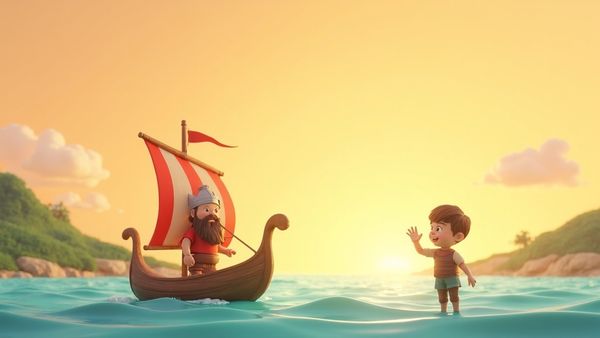
The true discovery of America involves the Indigenous Peoples who arrived over 15,000 years ago. The first known European explorer was the Viking Leif Erikson, who landed around 1000 CE, nearly 500 years before Columbus. Learn the whole exciting story!
Hold onto your explorer hats, because we’re diving into one of history’s BIGGEST questions: Who discovered America?!
You've probably heard the name Christopher Columbus, and for a long time, history books gave him all the credit! Columbus, an Italian explorer sponsored by Spain, sailed across the Atlantic Ocean in 1492 hoping to find a fast route to Asia. But guess what? He wasn't the first person to set foot on the land we call America. The continents of North and South America were already home to millions of people—the Indigenous Peoples! Plus, there’s evidence that explorers arrived even before Columbus, like the adventurous Vikings! Get ready to learn the whole, exciting story, for kids and curious parents alike!

Mira says:
"It’s so cool that history isn’t just one answer! It’s like finding layers of treasure. Columbus started the big European connection, but the Vikings were way earlier, and the Indigenous Peoples were here first! That's a lot of history!"
Who Were the Very First Americans?
Before any European ships showed up, America was already a wonderful, busy place! Millions of people, known today as the Indigenous Peoples of the Americas (like Native Americans, First Nations, or American Indians), lived all over the continents.
Their ancestors actually arrived thousands of years ago, long before any explorers from Europe! They traveled from Asia across a frozen land bridge where the Bering Strait is now, over 15,000 years ago or even earlier.
These first groups spread out, settled down, and created amazing, complex societies with huge cities, like Cahokia, which had over 20,000 people by 1250 CE! So, when we ask who discovered America, the real answer is the people who already lived here!
Mind-Blowing Fact!
When Christopher Columbus first met the Taino people in the Bahamas in 1492, he mistakenly thought he had reached the East Indies (Asia), so he called them 'Indians'!
The Viking Voyage: Leif Erikson Sails West!
Now, let’s talk about the first Europeans—the mighty Vikings! Long before Columbus, around the year 1000 CE, a Norse explorer named Leif Erikson sailed from Greenland and landed in North America.
Leif and his crew explored areas we now think are in Canada, possibly Newfoundland. They called the place they settled Vinland (which means 'Land of Grapes' or 'Land of Pasture').
Archaeologists have even found the remains of a real Norse settlement in Newfoundland called L’Anse aux Meadows, which lines up with the Viking stories!
Leif Erikson arrived before Columbus
Leif Erikson landed in North America
Columbus used: Niña, Pinta, Santa María
How Did Columbus Change Everything?
So, if the Vikings got there first, why do we hear about Columbus all the time? It’s because his voyages, starting in 1492, started something huge for Europe: the Age of Exploration and colonization.
Columbus made four trips across the Atlantic, and while he never realized it was a 'New World' (he kept thinking it was Asia!), his trips permanently connected Europe and the Americas.
Columbus’s First Trip: Ship, Date, and Destination
To make his grand journey, Columbus needed royal support. He convinced King Ferdinand and Queen Isabella of Spain to fund him!
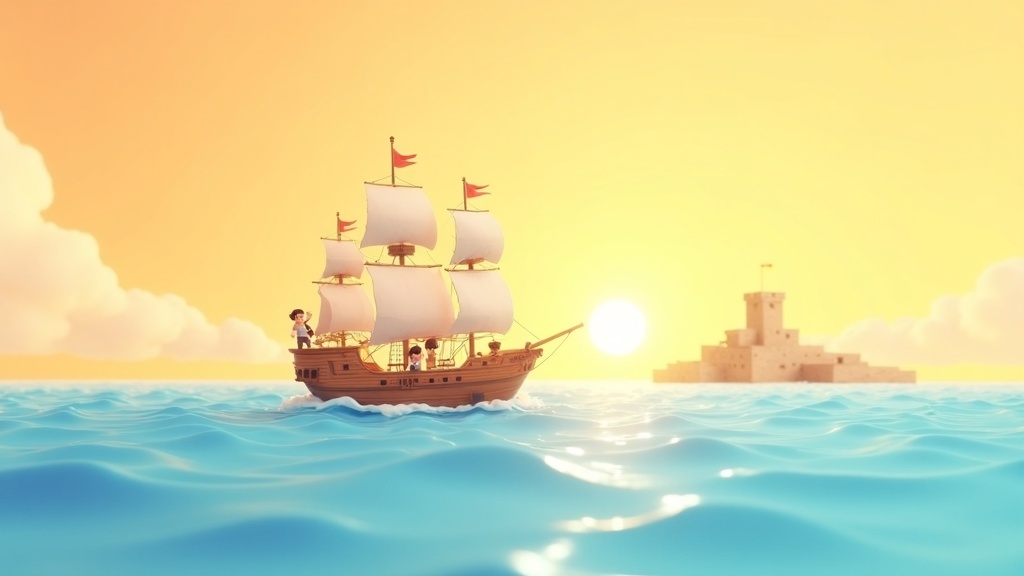
He set sail on August 3, 1492, with three ships: the Niña, the Pinta, and the Santa María.
After a long, sometimes scary voyage, they landed on October 12, 1492, on an island in the Bahamas that Columbus named San Salvador.
💡 Did You Know?
The continent wasn't actually named after Columbus! It was named after another explorer, Amerigo Vespucci, who was one of the first to say it was a completely new land, not part of Asia. 'America' comes from his first name, Amerigo!
🎯 Quick Quiz!
What did Christopher Columbus call the Indigenous people he met in the Bahamas because he thought he was in Asia?
So, Who Gets the 'Discovery' Credit?
This is the trickiest part! The history books have changed a lot because it's important to remember everyone involved.
If you mean the first humans to step foot here, it was the ancestors of the Indigenous Peoples thousands of years ago.
- First European: Leif Erikson and the Vikings, around 1000 CE (their settlements didn't last long in Europe's memory).
- The Connector: Christopher Columbus, in 1492, whose voyages led to lasting European colonization and the huge exchange of goods and ideas known as the Columbian Exchange.
- The Namer: Amerigo Vespucci, who realized it was a new continent and gave it its name!
The story of 'discovering' America is really a story about many different journeys that led up to the world we know today. It reminds us that history is always being updated as we learn more about the brave people who crossed vast oceans, whether it was Vikings 500 years before Columbus or the first humans who walked across the land bridge from Asia! Keep exploring!
Questions Kids Ask About Explorers
Keep Exploring the Unknown!
History is full of amazing people who took big risks to sail into the unknown. Whether you cheer for the Vikings or celebrate the voyages of Columbus, remember the people who were here all along! There are so many more explorers to learn about on History's Not Boring!