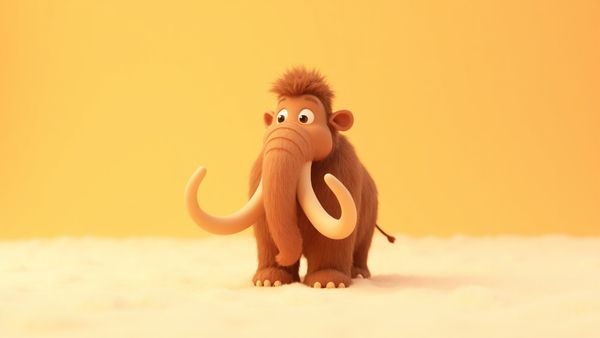
The Woolly Mammoth was an extinct, hairy relative of the modern elephant that thrived during the Ice Ages across Asia, Europe, and North America. They stood up to 11 feet tall at the shoulder and had thick fur and fat to survive freezing temperatures. Meet these legendary Ice Age superstars!
Imagine a world covered in giant sheets of ice, where snow fell almost every day. What kind of animal could survive that? Get ready to meet one of history's coolest creatures—the Woolly Mammoth!
These huge, hairy relatives of today’s elephants were true Ice Age superstars! The woolly mammoth lived across huge parts of Asia, Europe, and North America for a super long time—about 700,000 years! We know what they looked like because scientists have found amazing, frozen bodies in the cold ground, like time capsules! They weren't dinosaurs, but they were around *long* before people started building cities like we know them today.

Mira says:
"Did you know their fur could be over two feet long? That’s like wearing a giant, built-in, super-warm winter coat every single day! Talk about staying cozy for kids learning history!"
What is a Woolly Mammoth?
A woolly mammoth, or *Mammuthus primigenius*, was an extinct species of elephant that thrived during the Ice Ages. They looked a lot like the elephants we see today, but with some awesome cold-weather upgrades! They were built for freezing temperatures, unlike their modern cousins who live in warmer places.
Their closest living relative is actually the Asian elephant, not the African one! They evolved from other mammoths, like the massive Steppe Mammoth, about 300,000 years ago in Siberia.
Mind-Blowing Fact!
The woolly mammoth was so famous in ancient Europe that people actually carved and painted pictures of them on cave walls! Some of these amazing cave paintings are 32,000 years old!
How Big Were These Ice Age Beasts?
Woolly mammoths were seriously big! They were not the *biggest* mammoth ever (that title goes to the Steppe Mammoth!), but they were definitely giants. They stood up to 11 feet tall at the shoulder, which is taller than a basketball hoop!
They were generally about the same size as today's largest elephants, sometimes even bulkier. To help them keep their body heat in the freezing cold, they had a thick layer of insulating fat under their skin, sometimes up to 3 inches thick!
(Similar to large African Elephants)
(That's heavier than a school bus!)
(On the biggest males)
(The very last ones)
How Did They Survive the Snow and Ice?
Surviving the Ice Age required some amazing tools. The woolly mammoth had three main secrets to staying warm and finding food in the frozen landscape:
### Shaggy, Double-Layered Coat
They didn't just have fur; they had two layers! The outer layer had long, coarse hairs that could reach almost three feet long, and underneath was a dense, curly undercoat. This kept them warm even when temperatures dropped to nearly -58°F!
### Tiny Ears and Hump
Unlike elephants today with their big ears perfect for cooling off, mammoths had tiny ears—about the size of dinner plates! Smaller ears meant less body heat escaping into the cold air. Plus, they had a hump on their back that scientists think stored fat, giving them energy when food was scarce, like a camel's hump!
### Mighty, Curved Tusks
Those giant, curving tusks weren't just for show! They used them like giant shovels to dig through snow and ice to reach the grasses and shrubs they ate.
💡 Did You Know?
We know what mammoths ate for their last meal! Because some bodies froze so perfectly in the Siberian permafrost, scientists found grass and even flowers in their stomachs!
🎯 Quick Quiz!
What did scientists believe the hump on a woolly mammoth's back stored?
Why Did These Amazing Animals Disappear?
Most woolly mammoths vanished from the Earth around 10,000 years ago when the Ice Age ended. The world started getting warmer, and their grassy home, the 'mammoth steppe,' changed into forests and wetlands, making it hard to find their favorite food.
Humans lived alongside mammoths for a long time, and hunting them for food, tools, and shelter certainly played a role in their decline. It was likely a mix of a changing climate and human hunting that caused most of them to go extinct.
- The Last Stand: While most were gone 10,000 years ago, tiny, isolated groups held on!
- Wrangel Island Survivors: The very last woolly mammoths lived on Wrangel Island, an Arctic island off Russia.
- Later Than You Think: These final mammoths survived until about 4,000 years ago! That means they were still walking the Earth when the Great Pyramids of Giza were being built in Egypt!
- Genetic Troubles: Scientists think the last few hundred mammoths on the island suffered from inbreeding, which made them less healthy before they finally disappeared.
Even though they are gone, the woolly mammoth is still fascinating us today! Because we find their remains frozen, scientists have been able to study their DNA—the instructions for what made them a mammoth! It's one of the coolest detective stories in prehistory for kids and experts alike!
Questions Kids Ask About Prehistory
Keep Exploring the Ice Age!
From their thick, shaggy coats to their giant, sweeping tusks, the woolly mammoth was perfectly designed for a cold, icy world. Keep listening and reading to discover more amazing creatures from prehistory!