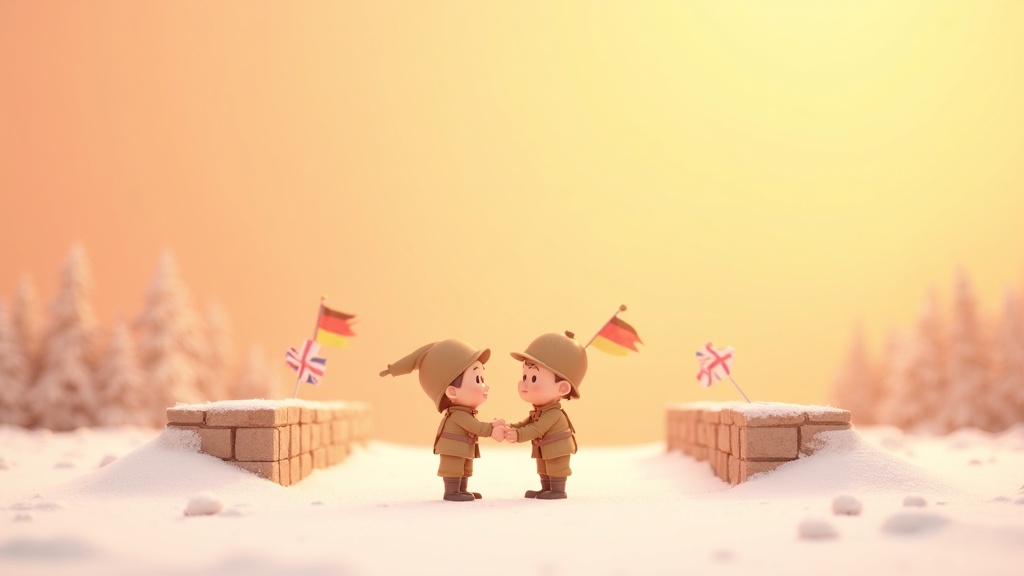

World War I alliances were secret pacts countries made promising to back each other up in a fight. These formed two huge teams: the Central Powers and the Allies. When Italy switched sides, the teams changed! It shows how team agreements can lead to massive global conflicts.
Imagine you and your friends are planning a giant, super-serious game of capture the flag, but you need to sign contracts first promising to back each other up no matter what! That’s kind of what happened before World War I.
Before the massive global conflict known as World War I began in 1914, many of Europe’s biggest countries made secret pacts and agreements to protect each other. These agreements were called alliances, and they were like unbreakable friendships! When one country got into a fight, its allies were pulled in, too. This meant that a small argument between two places could suddenly turn into a massive war involving huge teams! These two big teams were called the Central Powers and the Allies (or the Entente Powers).

Mira says:
"It’s like a giant game of 'If you mess with my friend, you mess with me!' But instead of recess time, it involved actual countries and huge armies. It shows how powerful friendships—even treaty friendships—can be!"
What Were the Two Main Alliances in World War I?
The two massive teams that clashed in World War I were formed by older groups of friends. On one side, you had the Central Powers, and on the other, you had the Allies.
The Central Powers mostly started as the Triple Alliance (say: Try-pul Ah-lee-ance), which included Germany, Austria-Hungary, and Italy. The Allies started as the Triple Entente (say: Try-pul On-tont), which was made up of Great Britain, France, and Russia.
Mind-Blowing Fact!
The name 'Central Powers' came from where they were located—most of the main countries (Germany and Austria-Hungary) were right in the *center* of Europe, between the Allied countries in the east and west!
Who Was On Each Team?
When the war kicked off in July 1914 after the assassination of Archduke Franz Ferdinand, not everyone stuck to their original plan! It was like a surprise roster change!
Italy, part of the original Triple Alliance, decided to stay neutral at first. Then, in 1915, they switched teams and joined the Allies! Meanwhile, the Ottoman Empire (modern-day Turkey) and Bulgaria joined Germany and Austria-Hungary, making the Central Powers a group of four.
Total countries fighting on the Allies' side
The main countries in this group
United States joined the Allies
How Did the Alliance Dominoes Fall?
The way the war spread so fast is the scariest part of the alliance system. Think of it like a row of dominoes—one push makes them all fall!
Here is the step-by-step chain reaction that started the global war:
The First Push (The Spark)
On June 28, 1914, Archduke Franz Ferdinand of Austria-Hungary was assassinated by a Serbian nationalist. Austria-Hungary was super angry and blamed Serbia.
Dominoes Start Falling
Austria-Hungary demanded tough things from Serbia. When Serbia couldn't meet all the demands, Austria-Hungary declared war on July 28, 1914.
Russia was Serbia's protector, so it started getting its army ready (mobilizing). Germany supported its ally, Austria-Hungary, and declared war on Russia.
Because Russia was mobilizing, France felt it had to back up its ally, Russia. Germany then declared war on France on August 3, 1914.
Germany's invasion plan for France required marching through neutral Belgium. Britain had promised to protect Belgium, so when Germany went through, Britain declared war on Germany on August 4, 1914! In just over a week, a local fight became a huge international war!
💡 Did You Know?
The original Triple Entente wasn't a strict 'we *must* fight' alliance like the Triple Alliance. It was more of an 'understanding' between Britain, France, and Russia, but when the crisis hit, they all stuck together!
🎯 Quick Quiz!
Which country *switched* sides during World War I to join the Allies?
Why Did Countries Join the War Effort?
Besides the treaties, countries joined for a few big reasons. Some, like Great Britain, worried about Germany getting too powerful, especially its navy.
Others saw a chance to gain territory or stop their neighbors from getting too strong. The United States waited until 1917 to join, mainly because Germany was sinking their ships and trying to get Mexico to fight the US!
- The Big Three Allies (at first): Great Britain, France, and Russia.
- The Main Central Powers (at first): Germany and Austria-Hungary.
- The Switcher: Italy joined the Allies in 1915, even though they were originally allied with Germany.
- The Latecomer: The United States joined the Allies in 1917 after staying neutral for three years.
By the time World War I finally ended in 1918, twenty-seven Allied and Associated Powers had fought against the Central Powers. This complex web of alliances showed the world just how connected—and sometimes how easily tangled—nations could become!
Questions Kids Ask About World War I
Keep Exploring the WWI Story!
Understanding these alliances is the key to seeing why World War I became such a huge, world-changing event! It shows that what happens in one place can quickly involve everyone else. Great job learning about these historic team decisions!