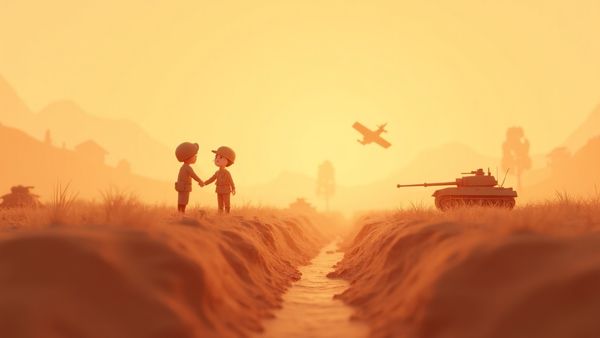
World War I, also known as the Great War, was a massive global conflict fought from 1914 to 1918 involving two main alliances: the Allies and the Central Powers. Nearly 40 million people became casualties. Learn how this shocking war changed the world map forever!
Did you know that one war was so huge and so shocking that people first called it 'The War to End All Wars'?
That war was World War I, also known as the Great War! It started way back in 1914 and raged across the world until 1918. This conflict involved giant teams of countries fighting with brand-new, scary technology that made battles unlike anything before! It was a global event that changed the world map forever, ending four massive empires. Get ready to learn some incredible, true stories about this super important time in history for kids like you!

Mira says:
"Wow, Finn, it’s hard to imagine a war that lasted four whole years! I read that the fighting was so intense that it changed how people thought about fighting forever. It’s important we learn about it so we can remember why peace is so important!"
What is World War I? The Two Big Teams!
Imagine a huge, complicated game where everyone picked a side. World War I was like that, with two main groups: the Allies (sometimes called the Entente Powers) and the Central Powers.
The Allies were mostly led by France, Great Britain, and Russia, with the USA joining later in 1917. The Central Powers were mainly Germany, Austria-Hungary, and the Ottoman Empire (which later became Turkey).
Mind-Blowing Fact!
The war actually started after a major event in 1914: the assassination of Archduke Franz Ferdinand of Austria-Hungary in Sarajevo! His death caused a chain reaction because of all the secret promises countries had made to help each other if one was attacked.
How Many People Were Touched by the Great War?
The numbers from World War I are staggering—they are so big that they are hard to even picture! It was one of the deadliest conflicts in human history.
When we talk about people affected by war, we use the word casualties. This means anyone who was killed, wounded, or went missing. Nearly 40 million people were casualties in total.
(Military & Civilian)
(Roughly)
Wow!
How Did Soldiers Fight in the Trenches?
One of the most famous (and toughest!) parts of WWI was trench warfare. Soldiers didn't just fight in open fields; they dug long, muddy ditches called trenches to hide from the enemy’s bullets and explosions.
These trenches could be miles and miles long, snaking across the land in places like France. The dirty, wet, and crowded conditions meant that soldiers often got sick from diseases, not just from fighting!
Danger Zone: No Man's Land
The empty, dangerous area between the enemy trenches was called No Man's Land. It was filled with sharp barbed wire and craters from explosions. Trying to cross it was super risky, but sometimes soldiers had to go 'over the top' to attack the other side.
💡 Did You Know?
World War I was the first big war where airplanes were used to fly over the battlefield to spot enemy positions! They weren't fast like today’s jets—they looked a bit like wooden kites with an engine glued on—but they totally changed how the war was fought!
🎯 Quick Quiz!
What was the dangerous, empty area between the two opposing trenches called during WWI?
Who Was Kind Enough for the Christmas Truce?
Even in a war this big, people showed amazing kindness! In December 1914, something magical happened on parts of the Western Front.
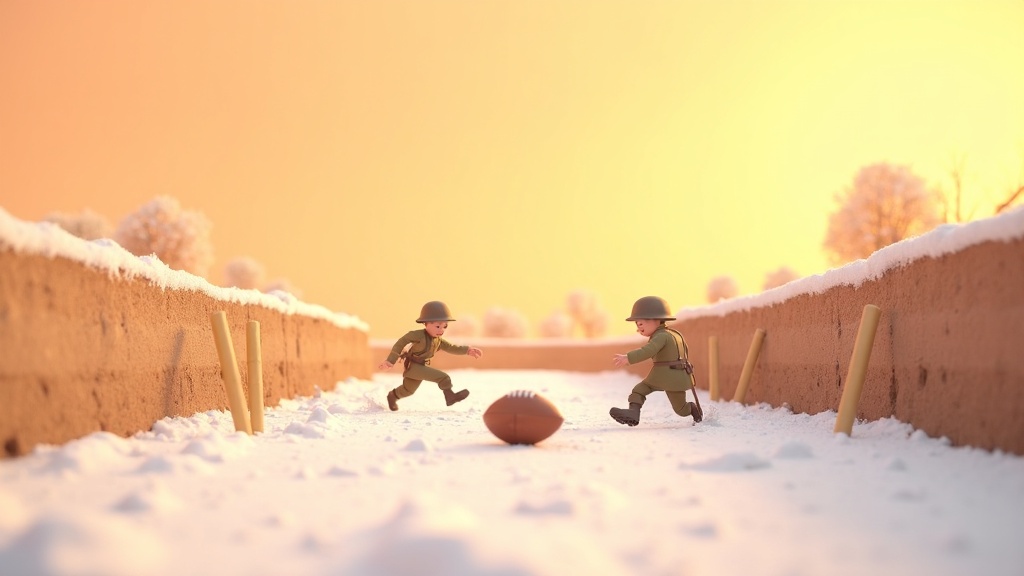
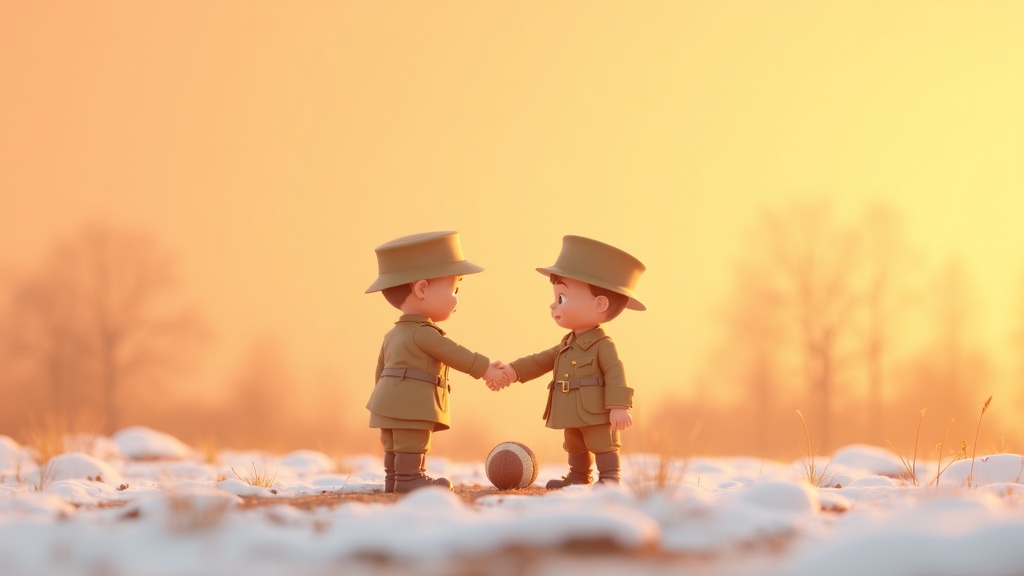
British and German soldiers stopped fighting for a few days to celebrate Christmas. This was called the Christmas Truce.
- They sang Christmas carols back and forth across the trenches.
- Soldiers climbed out into No Man's Land to talk and share food and small gifts like cigarettes.
- In some places, they even played impromptu games of football (soccer)!
Sadly, the leaders on both sides didn't want the truce to continue after 1914, and the fighting quickly returned to its terrible normal. But the Christmas Truce remains a famous story showing that even enemies are just people who sometimes want peace.
Questions Kids Ask About World War I
The End of the Great War and What Came Next
World War I finally ended in 1918 with the defeat of the Central Powers. While the war ended, the peace treaty that followed, the Treaty of Versailles, created new problems that would lead to another huge conflict years later. Learning about WWI helps us see how complex history is and why we study it—to understand our world today! Keep digging into history, explorers!