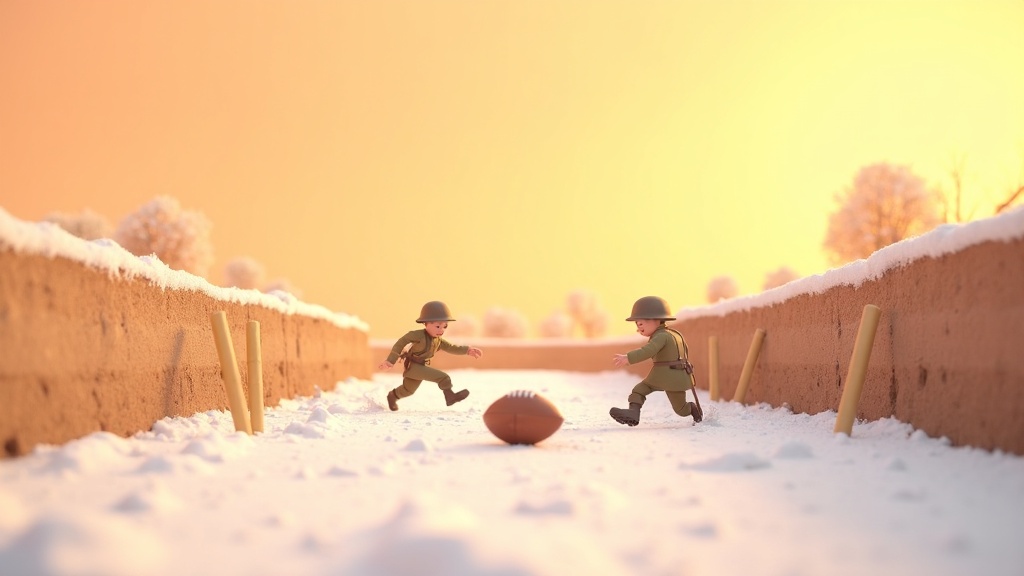
WWI trenches were long, narrow ditches dug by soldiers for protection during World War I (1914-1918). They were often dug in a smart zig-zag pattern, typically 3 meters deep, to stop enemy bullets from traveling straight down the line. This kept the soldiers safer while they lived and fought.
Imagine digging a giant, muddy ditch that you have to live in, sleep in, eat in, and fight from for *years*? Yikes!
That’s what soldiers did during a huge war called World War I, which lasted from 1914 to 1918. Instead of marching across open fields, armies dug deep, zigzag trenches into the ground to protect themselves. These trenches became their homes, offices, and battle stations along the long battle lines, especially on the Western Front in places like France. Learning about the trenches for kids helps us understand how incredibly difficult life was for the people who fought in this war!

Mira says:
"Wow, the trenches sound like the opposite of fun! I can’t imagine having to sleep with rats the size of cats nearby, like I read about. It makes me grateful for my warm, dry bed!"
What Are WWI Trenches Anyway?
Think of a trench as a very, very long, narrow ditch dug deep into the earth. They weren't just simple holes; they were complicated systems! The goal was simple: stay safe from the enemy's bullets and explosions. These ditches were built by soldiers using shovels and sometimes explosives, often at night or when the enemy couldn't see them.
Most trenches were dug in a zig-zag pattern, not straight lines. This was a super smart trick! If an enemy managed to jump into one section of the trench, they couldn't shoot straight down the whole line and hit everyone. The zig-zags protected the other soldiers inside. These trenches could stretch for miles and miles!
Mind-Blowing Fact!
By the end of the war, there were an estimated 2,490 kilometers (about 1,550 miles) of trench lines dug on the Western Front! That’s like digging a trench all the way from New York City to Dallas, Texas!
Stats on the Deep Ditch: How Big Were They?
To give you an idea of just how deep and wide these structures were, they followed specific designs to keep the soldiers as safe as possible. The front-line trenches needed to be deep enough so a soldier could stand up and still be hidden from enemy view, or at least have a small ledge to shoot over.
The trenches were often reinforced with sandbags piled high on the top edges to stop bullets and shell pieces. Inside, they also had special features to make life, slightly, more manageable. It was a tough, messy, underground city!
(About 10 feet)
(About 3–6 feet)
Between some enemy trenches
From front line to reserve trenches
How Did Soldiers Survive Inside the Mud Pits?
Living in the trenches was incredibly hard on the body and the mind. It was constantly damp, muddy, and miserable. When it rained, the trenches often flooded with dirty water, sometimes up to the soldiers' waists!
To try and keep their feet from rotting in the cold, wet mud, soldiers used wooden planks called duckboards to walk on. Even with this, a terrible sickness called trench foot could happen if their feet stayed wet for too long. Pests like lice and huge rats, sometimes as big as cats, were everywhere, making things even worse.
The Three Layers of the Trench System
The trenches weren't just one line; they were a whole network! Think of it like a huge, messy map underground.
Front-Line Trenches: This was the most dangerous part, where soldiers were closest to the enemy, ready to defend or attack. They had a 'fire-step'—a ledge to stand on to shoot.
Support Trenches: A bit behind the front line, this area was for soldiers waiting their turn or resting briefly. It was safer from direct fire.
Reserve Trenches: Furthest back, these trenches housed fresh troops waiting to move up if needed, or troops resting away from the main fighting. Communication trenches zigzagged between all of these lines, used to safely move food, mail, and supplies.
💡 Did You Know?
The dangerous area between the two enemy trench systems was called "No Man's Land". It was a wasteland of mud, shell holes, and sharp barbed wire. Crossing it was the most terrifying thing a soldier could be ordered to do!
🎯 Quick Quiz!
What was the main reason trenches were built in a zigzag pattern instead of straight lines?
Who Fought and Why Did They Stay Put?
World War I was called 'The Great War,' and it involved many countries. The style of fighting in these trenches, where both sides were dug in and nobody could advance easily, is called trench warfare. It got stuck this way for a long time because new weapons, like machine guns, made attacking across open ground nearly impossible without massive losses.
Soldiers lived here for weeks or months at a time, enduring the constant fear of artillery bombardments, enemy raids, and the terrible living conditions. They relied on their comrades—the other soldiers—for friendship, hope, and survival. Letters from home were treasures that kept their spirits up!
- Dugouts: Small underground rooms dug into the side of the trench for sleeping or taking cover during heavy shelling.
- Duckboards: Wooden planks laid on the muddy floor to keep soldiers' boots out of the water and mud.
- Barbed Wire: Spiky fences planted in No Man's Land to slow down or stop attacking soldiers.
- Fire Step: A small ledge built into the front wall that soldiers stood on to safely look over the top and shoot.
Even though the conditions were awful, soldiers found moments of incredible bravery and even kindness, like the famous Christmas Truce of 1914, where enemies briefly stopped fighting to share holiday cheer. This history for kids shows us that even in the darkest times, human connection shines through!
Questions Kids Ask About World War I
Keep Exploring History's Amazing Stories!
The trenches of WWI were a truly unique and tough part of history. By learning how soldiers lived and worked in those muddy tunnels, we can better understand the challenges people faced long ago. Great job learning about this complex topic!