Ancient Roman entertainment was based on massive, free public spectacles designed to thrill citizens, including gladiator fights and chariot races. The Circus Maximus could hold over 250,000 spectators! Learn about the action-packed, often dangerous, fun Romans enjoyed.
Imagine a world where the biggest sporting events could hold more people than all the football stadiums in your country combined! That's what life was like in Ancient Rome!
The Romans were super busy building roads, conquering lands, and making laws, but when it came time to relax, they *really* knew how to put on a show! They loved massive public spectacles that were often free for everyone to watch. These games and events were a huge part of Roman life, paid for by rich people or emperors who wanted to keep the citizens happy. Get ready to explore the most exciting, and sometimes scary, entertainment for kids in Ancient Rome!

Mira says:
"Wow, Finn! Seeing a mock sea battle inside the Colosseum sounds absolutely wild! I bet the sound of 50,000 people cheering was louder than any thunderstorm!"
What Was the Roman Arena All About?
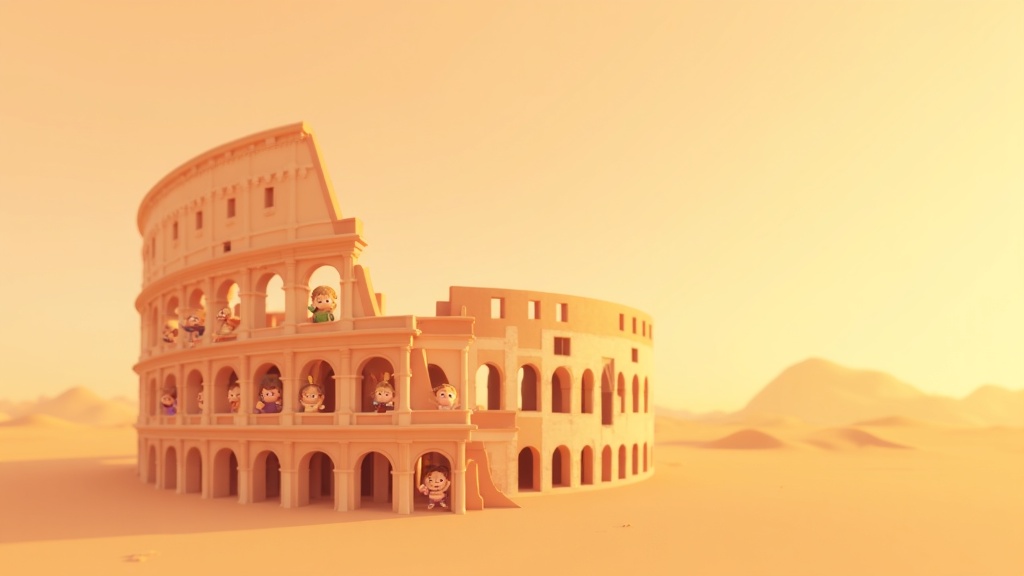
When you think of Roman entertainment, you probably picture the Colosseum! This massive building, officially called the Flavian Amphitheater, was the ultimate spot for huge public shows. It wasn't just for one thing, though; it hosted everything from gladiator fights to animal hunts and even mock sea battles! The Romans certainly loved drama and action.
The Colosseum was built by emperors like Vespasian and Titus around AD 70 to 80. It was a gift to the Roman people to keep them entertained and show off the Emperor's power. Inside, the seating was strictly organized by social class—the richest senators sat closest to the action, and the poor sat way up at the top. It was a place where everyone, no matter how rich, could gather to watch the spectacle.
Mind-Blowing Fact!
Did you know the Colosseum could sometimes be flooded with water to stage a *Naumachia*, or mock sea battle? Imagine watching ships battle it out right where the lions and gladiators usually fought!
Chariot Racing: The Sport of Speed Demons!
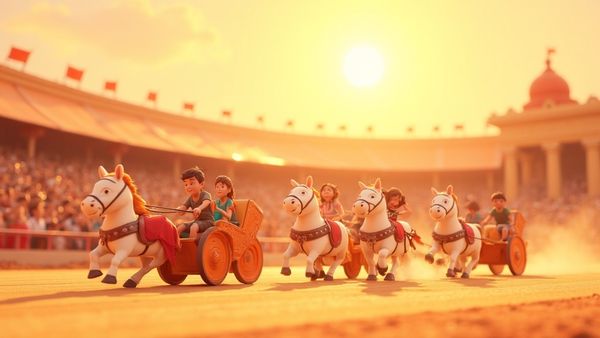
While the Colosseum was for fighting, the Circus Maximus was the place for the most popular sport: chariot racing! This enormous outdoor track was where speed and bravery mattered most. Imagine tiny wooden carts pulled by four powerful horses thundering around the track!
Chariot racing was super intense. The drivers belonged to one of four main teams, each with a color: the Whites, the Blues, the Greens, and the Reds. Fans were loyal to their teams, just like we cheer for sports teams today! Crashes, called *naufragia*, were common and incredibly dangerous, but the crowds loved the excitement.
(Circus Maximus Capacity)
(Colosseum's crowd control)
(By famous charioteer Diocles)
(Capacity of many open-air theaters)
How Did Gladiators Really Fight?
Gladiators were the rock stars of Rome! They were specialized fighters, often slaves or prisoners, trained to battle one another with different weapons and armor. It wasn't always a fight to the death, though. Since they were expensive professionals, about 10 to 20 percent of fights might end in death, but often a fight ended when one gladiator gave up by raising a finger, asking for *missio* (mercy).
The audience and the event sponsor (the *editor*) decided the loser's fate—sometimes by showing a thumb gesture!
The Different Types of Roman Fun
Roman fun wasn't just about the big arenas. They had smaller, fun activities too!
The Baths (Thermae): These weren't just for getting clean! The huge public baths were social clubs where Romans exercised, talked about politics, ate snacks, and relaxed in different temperature pools. They were a daily stop for many citizens.
Theatres and Mimes: Romans loved plays, especially comedies that made fun of everyday life or politicians. While dramas were popular early on, later, fast-paced, silly performances like mimes (short, often rude comedies) and pantomimes (solo dancers telling stories) became the biggest hits. Theaters were open-air and cleverly designed so that everyone could hear the actors perfectly.
💡 Did You Know?
Roman children played games that look a lot like ours! They had toys like rattles, scooters, jump ropes, yo-yos, and even played games similar to checkers using small animal bones as pieces (called knucklebones).
🎯 Quick Quiz!
What was the massive, long racetrack used primarily for exciting chariot races called?
Why Did the Romans Love Spectacles So Much?
The government knew that keeping people entertained was key to keeping the peace. This idea was called 'Panem et Circenses,' which means 'Bread and Circuses.'
If the poor citizens had free food (bread) and free entertainment (circuses), they were less likely to complain about the government or cause trouble. It was a way to distract everyone from boring or difficult political problems.
- Gladiators: Highly trained fighters who thrilled crowds with skill and bravery.
- Chariot Races: High-speed team sports at the Circus Maximus, with huge fan followings.
- Theatres: Open-air venues for comedies, tragedies, mimes, and pantomimes.
- Baths: Social centers for relaxing, exercising, and catching up with friends.
Whether it was watching a dramatic fight to the 'near-death' or cheering for the Greens in a chariot race, ancient Roman entertainment was all about big crowds, big emotions, and big spectacles! It truly shows how important community and excitement were to the people of this amazing ancient civilization.
Questions Kids Ask About Ancient Rome
Keep Exploring the Spectacles!
Phew! From the roar of the crowd to the clatter of chariots, Roman entertainment was non-stop action. Which show would *you* have gone to see first? Keep listening to History's Not Boring to uncover more amazing stories from the past!