The Heroic Age of Antarctic Exploration was a daring period from the late 1800s to 1917 when explorers raced to discover the frozen continent. Almost 98% of Antarctica is covered in ice up to 4 km thick! This exciting adventure shows how brave explorers unlocked one of the world's biggest mysteries.
Brrrr! Do you like snow? How about icebergs the size of cities? Imagine a place colder and windier than anywhere else on Earth—that's Antarctica!
This giant, frozen continent at the very bottom of our planet was a huge mystery for a long, long time. People dreamed about a huge southern landmass for thousands of years, but it wasn't until relatively recently that brave explorers actually found it! The most exciting time, full of incredible adventures and daring races, is called the Heroic Age of Antarctic Exploration, which lasted from the late 1800s until about 1917. Seventeen major expeditions set out from different countries to explore this icy wilderness.

Mira says:
"Wow, this place is the world's biggest ice cube! I bet the explorers needed a LOT of hot cocoa to stay warm. I’m amazed they went without modern gear!"
What Was First Discovered in Antarctica?
Before anyone set foot on the ice, explorers had to prove that Antarctica was even a real continent! The first person to sail across the Antarctic Circle—that imaginary line way down south—was the famous British explorer Captain James Cook way back in 1773. He didn't see land, but he saw rocks floating in the icebergs, which was a HUGE clue that land must be nearby!
The first time anyone officially saw the actual Antarctic mainland was on January 27, 1820. A Russian expedition led by Fabian Gottlieb von Bellingshausen and Mikhail Lazarev spotted an ice shelf. Just a few days later, on January 30th, an Irishman named Edward Bransfield spotted the Antarctic Peninsula.
Mind-Blowing Fact!
Even though people first saw the continent in 1820, the very first confirmed landing on the Antarctic mainland probably didn't happen until 1895! It was just too cold and scary before then!
How Much of Antarctica is Covered in Ice?
If you think your freezer is cold, try thinking about a whole continent covered in ice! Almost 98% of Antarctica is covered by thick sheets of ice. This ice is super deep—it's up to 4 km (or 13,000 feet) thick in some spots! That’s taller than the tallest buildings in the world stacked on top of each other!
Because of all that ice, Antarctica is the highest continent on Earth, with an average elevation of over 9,900 feet above sea level! It’s basically a giant, frozen mountain range!
Thick enough to be seen from space!
By Roald Amundsen (one month before Scott!)
Agreeing to use it only for science (since 1959)
How Did Explorers Race to the South Pole?
The biggest adventure during the Heroic Age was the race to be the first person to stand exactly at the South Pole! Two famous explorers led the charge: Roald Amundsen from Norway and Robert Falcon Scott from Britain.
Amundsen was sneaky and kept his South Pole plans a secret until he was already sailing! He reached the South Pole first on December 14, 1911. Scott and his team arrived about a month later, only to find Amundsen’s flag already there. Sadly, Scott and his entire team perished on the return journey.
Shackleton’s Amazing Survival Story
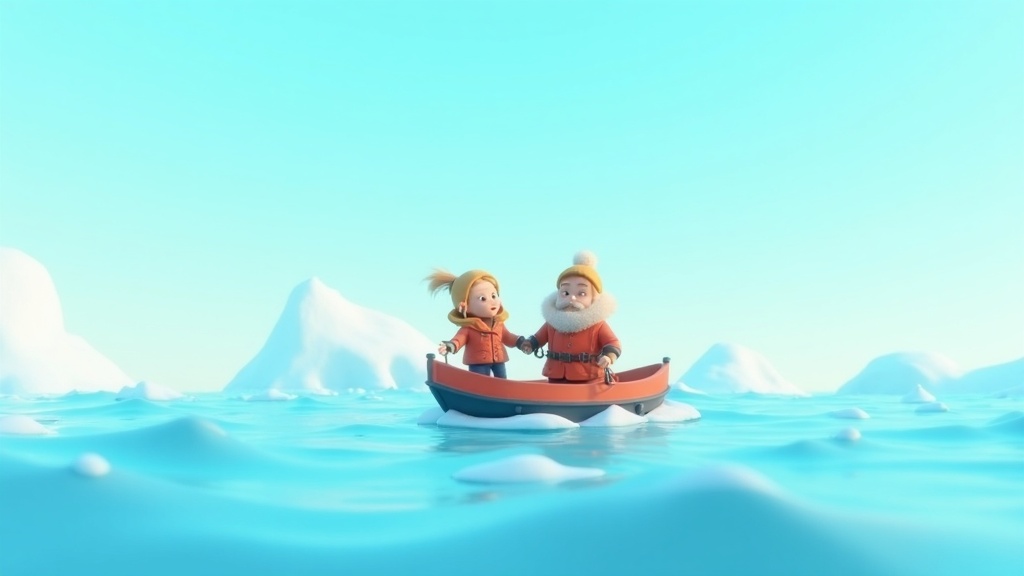
Another incredible explorer was Sir Ernest Shackleton. His goal was to be the first to cross the entire continent, but his ship, the Endurance, got trapped in the ice in 1915 and sank! Shackleton and his crew were stranded on floating icebergs for months!
To save them, Shackleton and five men sailed an open, tiny lifeboat over 800 miles of dangerous ocean to find help. Because of his amazing leadership, none of his crew died! That’s one of the greatest survival stories ever for kids to learn about!
💡 Did You Know?
Did you know that Antarctica is technically the world’s largest desert? It is! A desert is defined by how little rain or snow falls, and Antarctica gets very, very little precipitation—it’s just so cold that the snow never melts!
🎯 Quick Quiz!
What was the main goal of the Antarctic Treaty signed in 1959?
Who Are the Modern Ice Explorers?
After the big races to the South Pole, exploration changed! Instead of just planting flags, scientists started building research stations to learn about the planet. In the years 1957–1958, researchers from many countries set up over 50 bases.
Today, no one owns Antarctica, thanks to that international treaty. Scientists from all over the world—including people from the USA, Russia, Chile, Argentina, and Australia—work there studying everything from climate change to unique wildlife.
- The Coldest Spot: The coldest air temperature ever measured on Earth was here: -128.6°F (-89.2°C) at Vostok Station!
- No Permanent Residents: Antarctica is the only continent with zero permanent residents; only scientists and support staff live there temporarily.
- The Big Dipper: The largest glacier in the world, the Lambert-Fisher Glacier, is in Antarctica.
- Penguin Power: Antarctica is home to the largest penguin population, with nearly 17 different species visiting or living there.
From the first brave sailors who spotted a distant ice shelf to the scientists who now study the ice core samples deep beneath their feet, the history of Antarctica is a thrilling story of human curiosity and incredible toughness against the coldest place on Earth!
Questions Kids Ask About Explorers
Keep Exploring the Icy Frontier!
What an adventure! Antarctica proves that even the harshest places on Earth can’t stop curious explorers. Maybe one day you’ll be part of the next chapter of Antarctic history—the story of science in the deep freeze! Keep learning and stay curious, history adventurers!