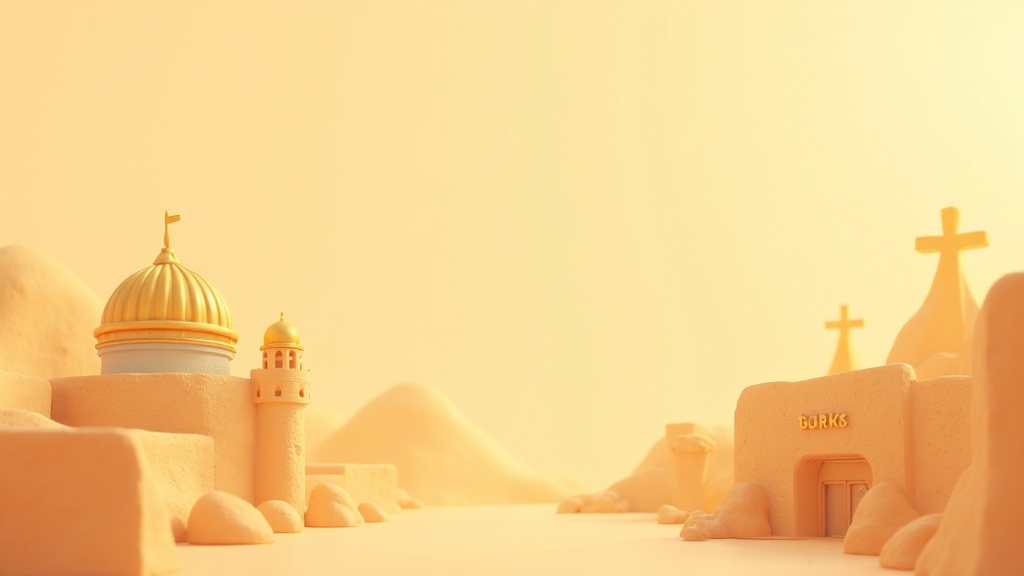
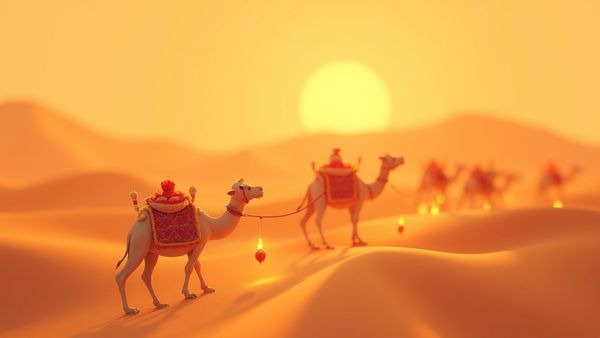
The Silk Road was an ancient network of trade routes that connected the East (like China) with the West (like the Roman Empire) for over 1,500 years. Spanning over 4,000 miles, it allowed for the exchange of silk, spices, and new ideas. It was the world's first great system for sharing treasures across continents.
Imagine a highway that didn't use cars, trains, or planes—a route that stretched for thousands of miles across deserts and mountains, connecting entire continents!
That's the Silk Road! It wasn't just one single road, but a huge network of paths used for trade over 1,500 years ago. This incredible route connected the East (like China) with the West (like the Roman Empire). Merchants used it to exchange amazing treasures, new ideas, and even new ways of thinking. It was one of the world's first big ways to share things across huge distances for kids to learn about today!
Mira says:
"Wow, Finn! Think about it: someone in China might have worn a silk shirt that was made from threads started by a worm that had never seen a person from the West! That’s how far those ideas and materials traveled!"
What Was the Silk Road Really?
The name sounds like it was only for silk, right? Well, silk was super important! It was a secret the Chinese kept for hundreds of years. Imagine having something so valuable no one else knows how to make it!
But the Silk Road was much more than just silk fabric. It was a giant system of trails, tunnels, and sea routes that made it possible for people to swap goods between empires like China, India, Persia, Arabia, and the Roman Empire. It truly was a world-connecting adventure for brave travelers!
Mind-Blowing Fact!
The Silk Road officially opened up around 130 BCE when the Chinese government started sending official trade missions far into Central Asia!
The Amazing Goods and Big Numbers of the Route
When we talk about trade, we mean things moving back and forth for hundreds of years. People didn't just buy a shirt; they traded for things they couldn't get anywhere near home. It was a slow journey, but worth the wait for the incredible items that arrived.
For example, China sent out its incredible silk, but what did they get back? They got things like beautiful glass from Rome, spices from India, and even strong horses from the faraway steppes!
(6,400 km) Long
Connected
Active Trade
How Did Merchants Survive Such a Long Trip?
Traveling the Silk Road was seriously tough! Imagine walking through deserts where the sun is blazing, then crossing icy mountains where the air is thin. It took months, sometimes even years, to complete a full round trip!
Merchants weren't usually traveling the whole way themselves. Instead, goods would change hands many times along the route, like passing a secret message down a long line of friends.
The Challenges of the Road
The biggest dangers weren't just the weather. Bandits sometimes waited along lonely stretches to try and steal the valuable cargo. Also, traveling so far meant merchants needed a place to rest, eat, and trade their goods safely.
This is why amazing trading cities, like Samarkand and Bukhara, popped up! These bustling stops became oases of safety and learning in the middle of nowhere.
💡 Did You Know?
While the Silk Road is famous for trading physical things, maybe the most important thing it traded was ideas! Things like mathematics, art styles, and even religions like Buddhism traveled right alongside the silk and spices!
🎯 Quick Quiz!
Which of these was NOT a major item traveling WESTWARD (out of China) on the Silk Road?
Why Should We Still Care About the Silk Road?
The Silk Road wasn't just about making rich people richer; it changed the whole world we live in! It forced different cultures to meet, learn from each other, and sometimes even fight over things.
It laid the groundwork for how countries trade with each other even today. Whenever you see something in a store that came from far away, you can thank the brave travelers who first made those long journeys on the Silk Road for kids to study!
- Silk: Kept secret by the Chinese for centuries; used as money by some groups!
- Spices: Things like cinnamon and pepper were highly desired in the West for flavor and preserving food.
- Paper: The technology for making paper eventually traveled west, making books and writing easier for everyone.
- Buddhism: This major religion traveled from India into China, changing the culture there forever.
Even though the original Silk Road faded when sea routes became faster and safer, its spirit of connection lives on! It reminds us that sharing and exploring new things makes the world a much more interesting place to live.
Questions Kids Ask About World History
Keep Exploring the World's Connections!
The Silk Road is a fantastic example of how people, even when separated by huge distances, always find a way to connect and share. Next time you enjoy a snack or read a book, think about the long journey those things—or the ideas behind them—might have taken!